Margin of Σrror

Margin of Σrror -

Why Chris Christie’s weight loss could actually work against him | Harry Enten

Polls have shown surprisingly that when it comes to male candidates, voters look more favorably on overweight aspirants

Sometimes, Washington DC seems like Hollywood for nerds. No clearer was that the case than the media’s reaction to the news that New Jersey governor Chris Christie submitted himself to lapband weight-loss surgery. Never mind that Christie said he was simply losing weight to be healthy for the sake of his family. The first question the press, as they would in Hollywood, asked is how being slimmer would impact Christie’s future career. So do Christie’s chance of becoming president improve because he is carrying fewer pounds?

Some of us may be too young to remember that the press wondered if Christie was “too fat” to be governor from New Jersey. In fact, it was the subject of a Newsweek article and Democrat Jon Corzine’s attacks in 2009. Back then, 78% of voters said that Christie’s weight made no difference in their vote. You might think that the voters were lying until you realize that Christie became arguably the most conservative Republican governor from New Jersey in modern history. He did so while winning a larger percentage of the vote than any Republican candidate for governor in New Jersey in 24 years.

Recent polling backs up the older polling. A Quinnipiac poll taken in March 2013 of New Jersey voters found that only 21% of voters had any reservations about a generic candidate’s weight. A September 2012 Quinnpiac poll showed that 84% of New Jersey voters said it wouldn’t make a difference in their vote if a generic candidate was overweight. In New York, the percentage rose to 88%, so it’s not just a home state bias. Even after an asthma attack in 2011, only 18% of New Jersey voters said they were worried about Christie’s weight. Keep in mind that all of this New Jersey polling took place when Christie had a far lower approval rating than he sports now.

There are also signs that attacks on Christie’s weight backfire. I’m not just talking about the fact that Jon Corzine lost in 2009. I’m talking about an October 2011 Quinnipiac poll that showed that 71% of New Jersey voters said that jokes about Christie’s weight were in bad taste. This polling was consistent across political parties. Moreover, 79% of women, who Republicans have a problem with, thought that the jokes were in bad taste. Most were voters willing to go farther than just “bad taste”: 72% agreed with Christie that political commentators who brought up his weight were “ignorant”.

Some might say that the weight issue would be different in other states. I don’t buy it. New Jersey and New York are two of the slimmest states in the nation with obesity rates of less than 25%. If weight were an issue, we’d expect to be in these states. I would think it would be far less of an issue in the battleground states of the midwest given that 25% to, in some cases, over 30% of the population is overweight in these states. In a Republican primary, Christie’s weight shouldn’t deter him from winning southern states given that the majority have obesity rates over 30%.

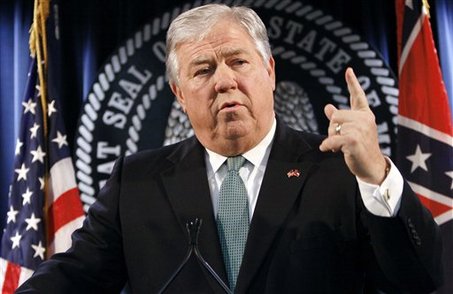
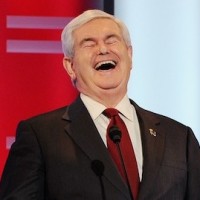
Indeed, some of the livelier southern politicians of our day were at least at some point overweight while in office. Anyone remember Bill Clinton’s weight problem? His McDonald’s excursions didn’t stop him from becoming president. Haley Barbour was a well-liked two-term Republican governor of Mississippi. Mike Huckabee did slim down for health reasons before his presidential run, yet was popular as an overweight governor. Newt Gingrich’s health would likely benefit from losing a few pounds, but I think most would agree he didn’t lose in 2012 because of weight.

Examples and polling aside, you might think that these politicians’ weight did hurt them. That is, they would have been even more popular if they were slimmer. Given the polling, you’d have to believe the voters were unwilling to admit that weight kept them from pulling the lever for these overweight candidates.

The good news is that we actually have scientific research that seeks to control for this potential social desirability bias. A 2010 University of Missouri-Kansas City study looked at how people reacted to pictures of a potential candidate of normal weight. This control group was compared to other respondents who were shown pictures of the same candidate, except the candidate’s picture was morphed to be obese. Everything else about the candidate including political affiliation, views, and background remained the same.

And did the candidate’s weight make a difference? If the candidate was female, extra weight was a small negative. That concurs with a survey this year by Lake Research that found the mere mention of a woman candidate’s physical appearance hurt them. This was especially the case when the appearance coverage was unflattering.

For men, however, the 2010 University of Missouri study found that being obese was not a negative. It was actually a large positive! Respondents were over 20 points more likely to have a warmer feeling towards the same male candidate if he were obese than if were skinny. The obese candidate was 10% better liked than if he were skinny. The obese candidate was also thought to be more intelligent than the skinny one.

These positives for males make sense if you think about it. Society trains us to think this way. To bring it back to Hollywood, look at the Nutty Professor with Eddie Murphy. Murphy’s character Professor Klump was obese. He was, however, smart as a whip and very likable. Klump’s skinny equivalent Buddy Love was not nearly as smart and was a jerk. At the end of both Nutty Professor 1 and 2, the audience is rooting for Klump to beat his arch nemesis, and he does. Meanwhile, Klump doesn’t get together with an overweight woman. Instead, he ends up with characters played by the very attractive Jada Pinkett Smith in the first movie and Janet Jackson in the second one. These characters happen to be very kind and intelligent too.

When you take all the evidence into account, Chris Christie doesn’t need to lose weight to become president. Voters say they don’t care about weight, and their actions back them up. The research says that Christie’s electoral prospects might be better off keeping on the pounds. For now, can’t we just be happy that Christie wants to be a healthier individual?

guardian.co.uk © 2013 Guardian News and Media Limited or its affiliated companies. All rights reserved. | Use of this content is subject to our Terms & Conditions | More Feeds

What early polling can – and can’t – tell us about 2013′s key US elections | Harry J Enten

In races like the New York mayoral election, most candidates’ lack of name recognition makes early polling highly unreliable

Polls taken early in the election season are a most interesting phenomenon. The media loves them, while some think they are a waste of time.

The record shows that early surveys can tell us a lot about where a race will end up in the case of midterm House and even Senate elections. But in the 2013 elections, early polling is, at best, a very rough guide, and at worst, can tell us absolutely nothing.

Let’s take a look at the history of polls from early to late in the campaign for past contests in the races being held this year. The Massachusetts special election upcoming later this year may or may not feature Republican Scott Brown. The polls at this point have him ahead of almost all his opponents, except for, perhaps, Governor Deval Patrick.

The issue here is that none of his opponents is really well-known, which is why I wouldn’t dismiss any of them at this point. The plurality of voters have not formed an opinion on possible Democratic candidates like Mike Capuano, Ed Markey, or Stephen Lynch. The same holds true for possible Republican candidate Bill Weld.

As for the history, at this point in the 2010 Massachusetts special Senate election, Scott Brown was down 30pt to eventual Democratic nominee Martha Coakley. In fact, he was still down by 30pt with only two months to go. Yet he went on to win by 5pt.

Some might say 2010 was an exception, but just look at another special election, a year later, for West Virginia governor. The only pre-primary poll in that race had eventual Democratic candidate Earl Ray Tomblin ahead of Republican candidate Bill Maloney by 33pt. Tomblin would only retain the governor’s mansion for the Democrats by a little less than 3pt.

The bottom line is special elections can turn on a dime, especially when name recognition is low.

Another place where name recognition may be affecting early polling is in New Jersey. I already discussed how current polls that show Chris Christie well ahead of his Democratic opponents are likely inflated by a post-Sandy bounce. One would expect that his approval rating will eventually fall back to a still impressive mid 50s level.

That’s exactly where polls put another incumbent Republican Christine Whitman in 1997. Whitman led then relatively unknown state senator Jim McGreevy by about 15pt in early data. Whitman’s approval rating and polling lead held into the final month; but then, McGreevy rapidly closed the gap and only lost by 1pt.

Pre-Sandy polls put Christie ahead of declared Democrat Barbara Buono by a similar 16pt. Christie actually led by only 6pt over possible Democratic candidate Richard Codey. Christie is, no doubt, the favorite, but New Jersey is a Democratic state – and the last Republican with a good lead nearly lost.

Right next door to New Jersey is the New York City mayoral race. Early surveys have the probable Republican candidates down by 50pt to a generic Democrat in this Democratic bastion. Maybe that will hold, but I’m betting it won’t.

You don’t really have to look far to understand that polling in New York City mayoral elections is about as reliable as the subway after midnight. They were well off in 2009 and that was not an anomaly.

Polls had Democrat David Dinkins ahead of Republican Rudy Giuliani by 20pt two months out in 1989, and by 14pt in the closing weeks. Dinkins won by 2pt.

Republican Mike Bloomberg overcame an early 40pt deficit because of the 9/11 attacks to beat Democrat Mark Green in 2001. Democrat Freddy Ferrer was ahead of Bloomberg by 8pt in March of 2005. By November of that year, surveys had Bloomberg leading by 30-40py. Bloomberg took the race by 19pt.

And, of course, we don’t even know who the Democratic nominee will be for mayor this year.

Finally, in the great Commonwealth of Virginia, early gubernatorial surveys have Democrat Terry McAuliffe barely ahead of Republican Ken Cuccinelli. As in Massachusetts, however, over 45% of voters have no opinion of either candidate. There is also talk that Republican Lt Governor Bill Bolling may run as an independent, which could really throw this race for a loop.

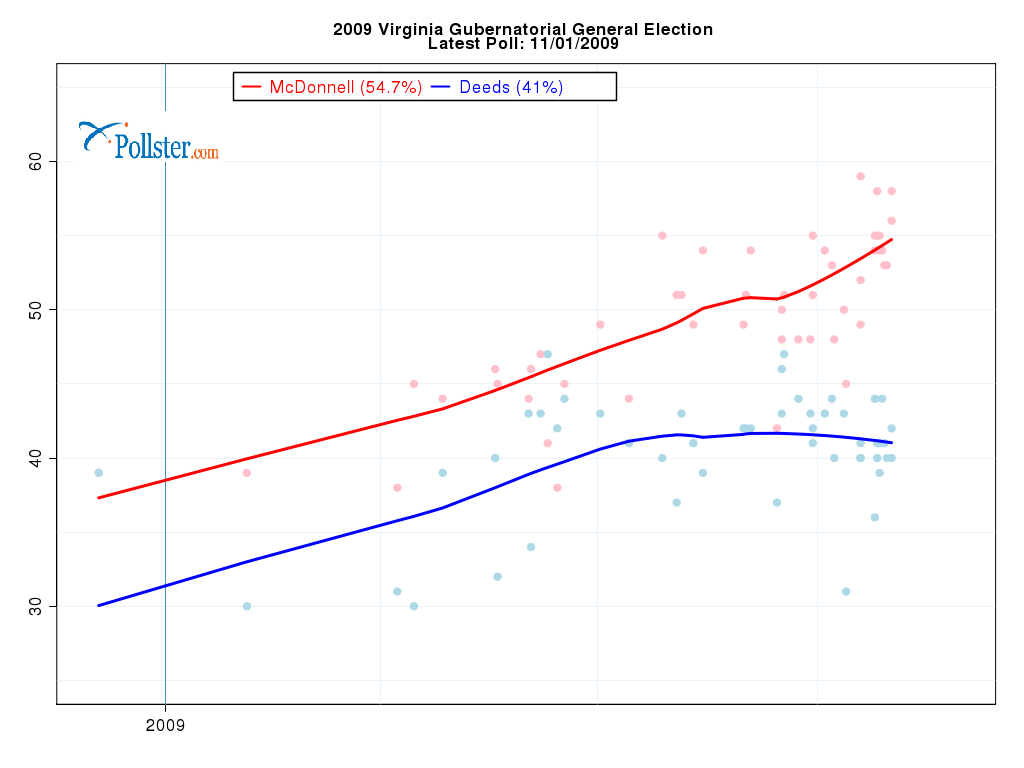
Early surveys in the last two Virginia gubernatorial elections were off the eventual margin by 10-15pt. In 2005, Democrat Tim Kaine trailed Republican Jerry Kilgore by 5-10pt through the summer of 2005. It was only in the final months that he pulled ahead and won by 6pt. In 2009, Republican Bob McDonnell was ahead of Democrat Creigh Deeds by mid single digits through the early fall. He ended up winning by 17pt.

Thus, in the four marquee races for 2013, early polls should be taken with a big grain of salt. In all four cases, we have examples in the past 15 years of early polls being anything from 15pt to upwards of 30pt off.

That’s not to say the early polls won’t be right this time. It just means that if they are, there will definitely be some luck involved.

guardian.co.uk © 2013 Guardian News and Media Limited or its affiliated companies. All rights reserved. | Use of this content is subject to our Terms & Conditions | More Feeds